
Across the UK, businesses are dealing with a new reality; summers are getting hotter, winters are becoming wetter rather than colder and energy costs remain high.
Many commercial buildings are struggling as a result.
From offices and retail spaces to schools and healthcare settings, we’re seeing a growing number of workplaces affected by persistent damp, condensation, and uncomfortable indoor environments — all while businesses try to manage rising heating costs.
This combination is forcing many organisations to rethink how they approach heating, cooling, and employee wellbeing.
Climate Shift is Affecting Commercial Properties
Many commercial buildings in the UK were designed for predictable seasons: cold winters, moderate summers. But these conditions are not the current standard.
- Extended periods of rainfall and high humidity.
- Sudden summer heatwaves.
- Mild winters that discourage consistent heating due to energy prices.
This creates ideal conditions for internal moisture build-up — especially in larger buildings with variable occupancy and limited natural ventilation.
Damp: A Growing Problem in Workplaces
Damp in commercial environments is rarely dramatic – it builds quietly.
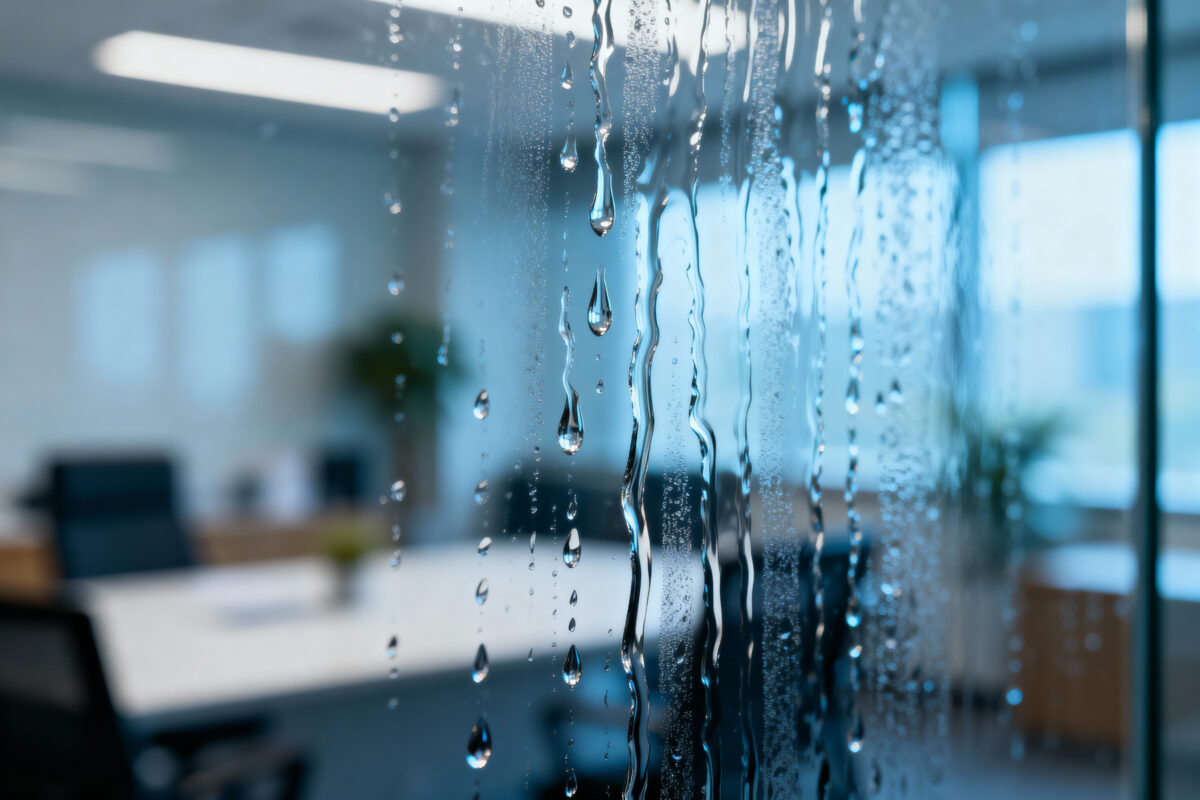
- Condensation on windows.
- Musty odours.
- Cold patches on walls.
- Fluctuating indoor temperatures.
Over time, damp leads to noticeable problems and starts to affect people.
- Mould growth.
- Degraded finishes and furnishings.
- Poor indoor air quality.
- Reduced thermal efficiency.
- Increased maintenance costs.
High humidity and damp conditions impact staff comfort, concentration, and wellbeing — all of which directly influence productivity.
Rising Energy Costs are Making Damp Problems Worse
With gas prices still elevated, many businesses are reducing heating wherever possible.
While entirely understandable, this often has unintended consequences.
- Colder surfaces inside the building.
- Moist air condenses more easily.
- Humidity rises.
- Damp becomes harder to control.
Once a building becomes damp, it takes more energy to heat, creating a cycle of inefficiency.
In trying to reduce energy costs, many businesses unknowingly make their buildings harder — and more expensive — to run.
Modern Air Conditioning Can Help Solve Damp Problems in Commercial Properties
Today’s commercial air conditioning systems are far more than cooling units.
- Efficient heating via heat-pump technology.
- Continuous dehumidification.
- Precise temperature control.
- Zoned comfort for different areas.
- Improved indoor air quality.
By actively removing moisture from the air while maintaining steady temperatures, air conditioning helps stabilise internal environments and prevent the conditions that allow damp to develop.
In effect, it becomes a building management tool, not just a comfort feature.
Protecting Buildings, Budgets, and People
Proper climate control delivers multiple benefits:
- Drier interiors
- Lower condensation risk
- More comfortable staff and visitors
- Reduced mould and maintenance issues
- Improved energy efficiency
- Greater resilience to extreme weather
For offices, retail spaces, hospitality venues, schools and healthcare facilities, this translates into:
- Better working conditions
- Reduced absenteeism
- Lower long-term operating costs
- Protection of the physical asset itself
- A Smarter Approach to Year-Round Climate Control
Air conditioning offers a single system that supports:
- Cooling during summer heatwaves
- Efficient heating in winter
- Ongoing humidity control throughout the year
With UK weather becoming increasingly unpredictable, many businesses are now choosing integrated HVAC solutions that provide flexibility, efficiency, and stability — rather than relying solely on traditional gas heating.
Time to Rethink Commercial Comfort
Hot summers and damp winters are no longer exceptions — they’re becoming standard.
Commercial buildings need climate systems that can respond to both extremes while keeping energy use under control.
Modern air conditioning delivers exactly that:
a reliable, efficient way to manage temperature, humidity, and indoor air quality all year round.
For many organisations, it’s no longer a question of comfort — it’s a matter of building performance.